![[HERO] Why Reframing Behavior as Regulation Will Change the Way You Support Neurodivergent Students](https://cdn.marblism.com/xecvwS-sUi1.webp)
Let’s be honest. We’ve all been there.
It’s 10:30 AM on a Tuesday. You’ve got a lesson plan that deserves an Oscar, your coffee is still semi-warm, and suddenly, the vibe shifts. A student: let’s call him Leo: decides that instead of finishing his math worksheet, he’s going to hurl his pencil across the room and slide under his desk like he’s auditioning for a role in a submarine movie.
In the old days (and by “old days,” I mean about ten minutes ago in many classrooms), the immediate reaction would be: “Leo is being defiant. Leo is choosing to ignore instructions. Leo needs a consequence.”
But after 25 years in the trenches of education, I’m here to tell you that looking at Leo through the lens of “defiance” is like trying to fix a software bug by yelling at the monitor. It doesn’t work, it exhausts you, and it leaves Leo feeling like a “bad kid.”
What if I told you that what looks like a discipline problem is actually a biological SOS?
When we shift our perspective from compliance to regulation, everything changes. Supporting neurodivergent students isn’t about getting them to sit still and blend in; it’s about understanding the language of their nervous system.
The Myth of the “Naughty” Student
For decades, the educational system has been obsessed with compliance. We reward the kids who sit quietly and we punish the ones who don’t. We call it “classroom management.” But for our neurodivergent students: those with Autism, ADHD, sensory processing differences, or anxiety: this model is fundamentally flawed.
When a student’s brain is wired differently, their sensory input is dialed up to eleven. That humming fluorescent light? To you, it’s background noise. To them, it’s a chainsaw. That “simple” transition from lunch to math? To them, it’s a terrifying jump into the unknown.
When a student flips a desk or shuts down completely, they aren’t “choosing” to be difficult. They are experiencing a nervous system overload. Their “upstairs brain” (the logical, thinking part) has checked out, and their “downstairs brain” (the fight, flight, or freeze part) has taken the wheel.
Behavior is communication. It is a neon sign flashing: “I do not have the tools to handle this moment right now.”

Reframing the Narrative: A New Lens
To truly master inclusive classroom strategies, we have to change the vocabulary we use in our heads. When we change the word, we change our internal reaction. And when we change our reaction, we change the outcome for the student.
Try these reframes on for size:
- Instead of “Defiant,” try “Overwhelmed.” The student isn’t saying “I won’t”; they are saying “I can’t right now.”
- Instead of “Lazy,” try “Lacking Executive Function.” They aren’t refusing to start; they literally don’t know how to break the task down into the first step.
- Instead of “Attention-Seeking,” try “Connection-Seeking.” They are reaching out for safety in the only (albeit messy) way they know how.
- Instead of “Disruptive,” try “Sensory-Seeking.” Their body is screaming for movement or input to help regulate itself.
When you view a meltdown as a lack of skills rather than a lack of will, your compassion naturally rises. You stop being a cop and start being a coach. That is where the magic happens. Your brighter future starts today, and it starts with this simple shift in perspective.
The Secret Sauce: Regulation Starts with YOU
Here is a truth bomb that might be a little hard to swallow: A dysregulated adult cannot regulate a dysregulated child.
If you walk into a situation with your shoulders up to your ears, your voice tight, and your “I’ve had it up to here” face on, the student’s nervous system will pick up on that immediately. Neurodivergent students are often hyper-aware of the “vibe” in the room. If you are escalating, they are escalating.
I call this “The Blowtorch Method”: trying to put out a fire by hitting it with a blowtorch. It only makes the flames higher.
Before you intervene, take a breath. Check your posture. Lower your volume. Your calm is contagious. By regulating your own nervous system first, you provide a “buffer” for the student. This is the heart of neurodiversity in the classroom. We aren’t just teaching subjects; we are co-regulating human beings.

Practical Strategies for the Inclusive Classroom (and Home!)
So, how do we put this into practice? We need actionable techniques that move beyond theory. Whether you are a teacher in a classroom of thirty or a parent at the kitchen table, these strategies help build a neuro-affirming environment where students can thrive.
1. The Sensory Audit
Take a look around. Is the room a visual explosion of posters and bright colors? Is there a constant buzz? For a neurodivergent student, this is “sensory clutter.”
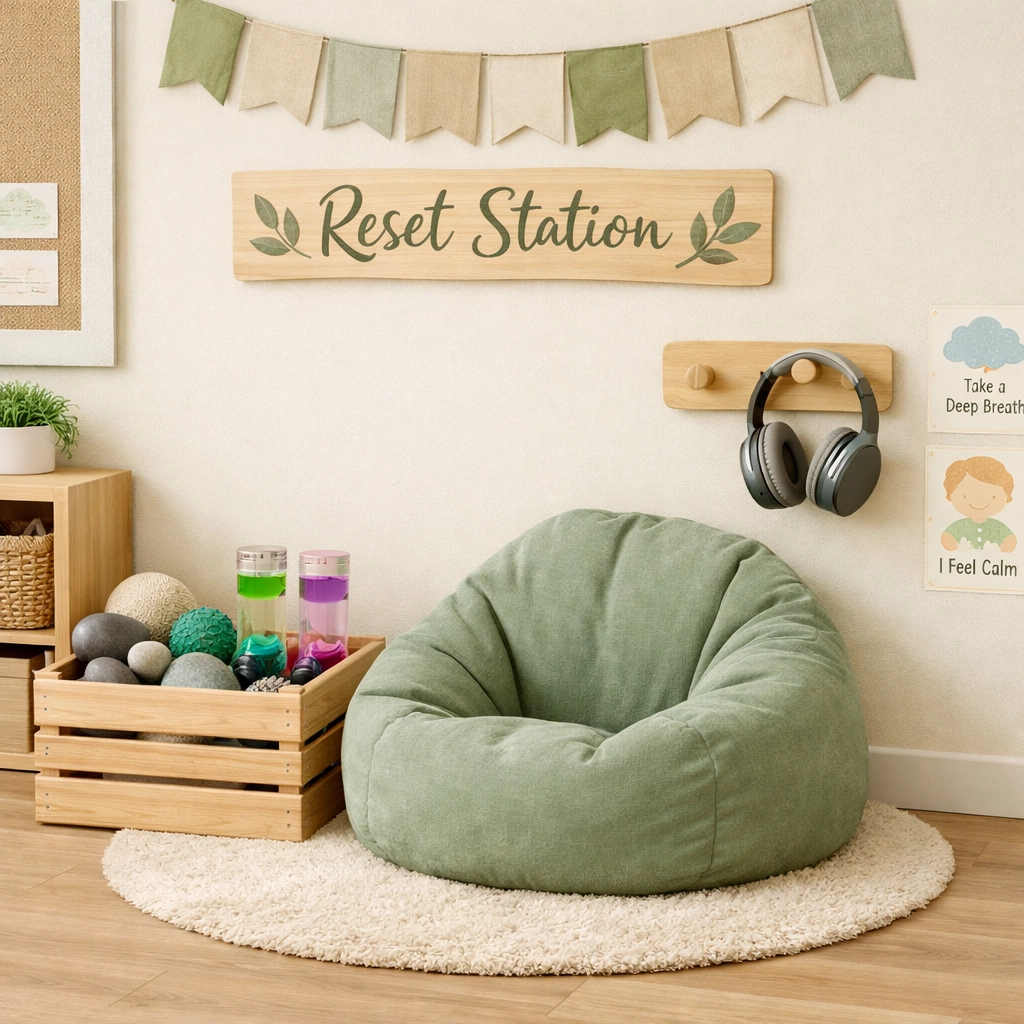
- Action: Create a “Calm Down Corner” or a “Reset Station.” This isn’t a time-out; it’s a choice-based space with fidgets, noise-canceling headphones, or weighted blankets where a student can go before they hit the breaking point.
2. Transition Bridges
Transitions are the Bermuda Triangle of the school day. Moving from one activity to another is where most “behaviors” happen.
- Action: Use visual timers (like a Time Timer) or “first/then” boards. Give 5-minute, 2-minute, and 1-minute warnings. Provide a clear “bridge” activity, like a quick movement break, to help the brain shift gears.
3. Validate the Struggle
Sometimes, the most powerful thing you can say is: “I can see this is really hard for you right now. I’m here, and we’re going to figure it out together.”
- Action: Skip the lecture. When a student is dysregulated, words are just noise. Use minimal language, offer a supportive presence, and wait for the “downstairs brain” to calm down before trying to problem-solve.
4. Collaborative Problem Solving
Once the storm has passed, don’t just hand out a punishment. Ask the student: “What happened back there? What made that part so tricky?”
- Action: You’d be surprised how often they can tell you exactly what the trigger was. Maybe the chair was “scratchy,” or the instructions felt like a giant mountain. Work together to find a solution for next time. This honors their sovereignty and builds self-advocacy skills.
Why This Matters: Dignity Over Compliance
I’ve spent over two and a half decades at Teach the Spectrum coaching helping educators and parents realize that the goal isn’t to “fix” the student. There is nothing broken. There is only a mismatch between the environment and the student’s current capacity to regulate.
When we prioritize regulation over compliance, we are telling the student: “I see you. I respect you. You are safe here.”
This approach doesn’t just reduce “behavioral incidents”: it builds trust. And trust is the only foundation upon which real learning can happen. When students feel understood, they stop spending all their energy on survival and start spending it on growth. They begin to shine.
We have to move away from the “power over” dynamic and move toward “power with.” It’s about cultivating a space where every student, regardless of their neurotype, feels like they belong.
Your Journey Toward Transformation
If you’re feeling overwhelmed, know that you don’t have to do this alone. Shifting the culture of a classroom or a home takes time, patience, and a whole lot of grace: mostly for yourself. There will be days when you lose your cool, and that’s okay. Repair the relationship, apologize to the student, and try again tomorrow. That’s modeling regulation, too!
Remember: every “challenging behavior” is an opportunity to connect. Let’s stop looking for ways to control our students and start looking for ways to support their hearts. If you’d like to explore more resources, you can visit Teach the Spectrum.
Your classroom can be a place of peace. Your home can be a sanctuary. It all starts with the lens.

 TeachtheSpectrumLA
Leave a comment